Why a wall outlet is not a charger
An electric vehicle can pull a high current for hours at a stretch, and that is a very different demand from a vacuum or a space heater running for twenty minutes. A standard outlet and a long extension cord will heat the cord, the plug and the receptacle, and the symptoms show up slowly: a warm plug, a discoloured faceplate, a breaker that trips overnight while the car is plugged in.
Charging also lands on a house that already has a day job. If the panel is full, the service is small, or the garage run is long and thin, a new charger can push a marginal setup past its limit. The same goes for a shop or storefront, where a charging station shares a service with lighting, HVAC and equipment that were never counted for a vehicle.
The fix is to treat the charger as its own load. That means its own circuit, sized and protected for continuous use, rather than borrowing from whatever was nearby.
How G4 sets up a charging station
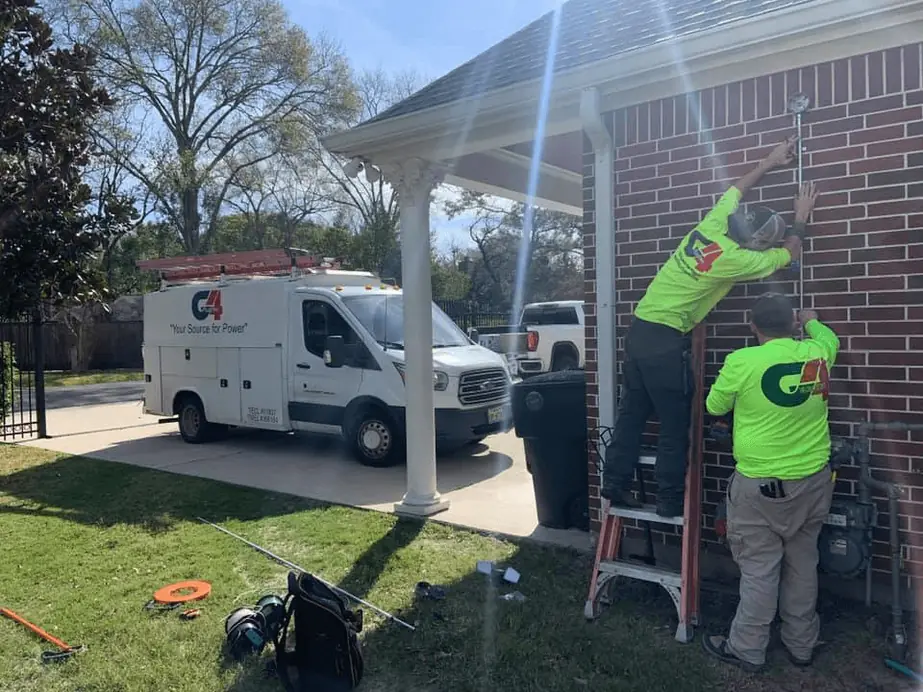
G4 Electric lists this work on its own site: “We helped local businesses and homes by installing EV power stations. Our team ensured each setup met safety standards, offering reliable and efficient charging solutions for electric vehicle users.” The sequence behind that line starts at the panel, where the crew checks what the service can spare before a wire is run.
From there it is a dedicated circuit: a breaker rated for the charger, conductors sized to the load and the distance, a path to the wall or post that suits the location, and a charging unit mounted and wired to its rating. Outdoor and garage locations get enclosures and fittings suited to the weather. If the panel cannot carry the extra load, the honest answer is a panel upgrade first, and G4 does that work too.
The crew is licensed and insured, working under master electrician licence TMEL 366164, and handles home garages as well as small commercial lots across Conroe, The Woodlands and Woodforest.
After the charger is on the wall
Once it is installed, a charger should be unremarkable. The car charges, the breaker stays put, nothing runs warm, and the rest of the house carries on. Ask where the charger breaker sits in the panel and how it is labelled, so anyone in the house can switch it off.
Call again if you add a second vehicle, swap to a larger charger, or add other heavy loads such as a hot tub or a generator, because each one changes what the service has to carry. Call right away for a charger that trips its breaker, a warm connection at the plug or outlet, a cracked cable or any burning smell. The G4 line at (936) 264-1387 is answered 24 hours a day.