Why the breaker keeps popping
A breaker that trips is doing its job. It is cutting power because the circuit behind it is carrying more than the wire and the breaker were sized for, or because something on that circuit is failing. The usual pattern in a busy house is simple: a single 20-amp run feeds the microwave, the toaster and the coffee maker, and the moment two of them start together the handle drops.
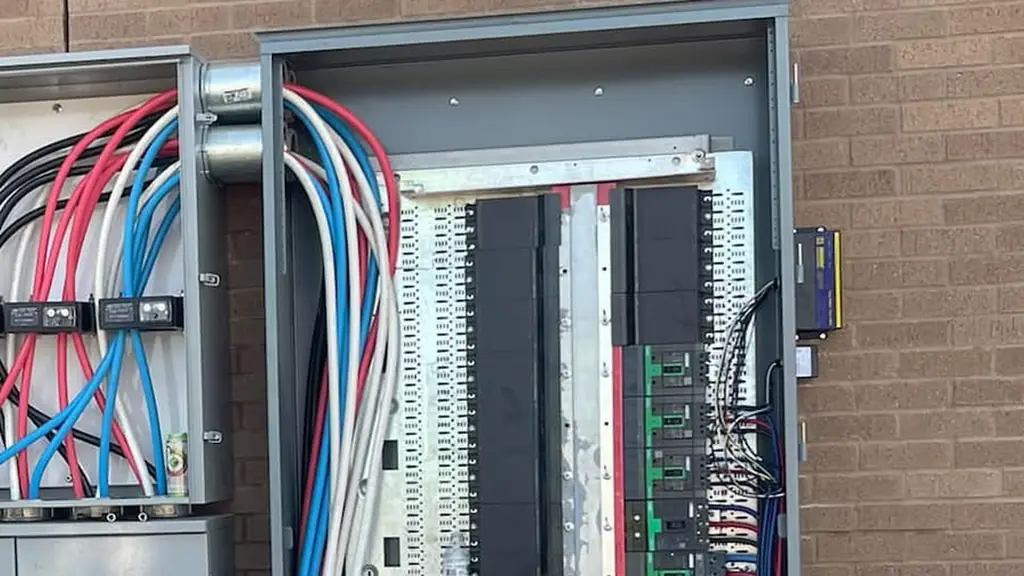
Panels themselves wear out of usefulness before they wear out physically. A panel full of tandem breakers, double-tapped lugs and no open spaces has nowhere left to put the next circuit. Scorched bus bars, a breaker that feels loose in its slot, buzzing from the enclosure or a panel that is warm to the touch are different problems altogether, and they are the ones to call about the same day.
Additions are where this shows up most. A new room, a garage turned into a workshop or a house built with too few circuits will all find the limit of the panel quickly.
How G4 sizes and swaps a panel
The work begins with a load calculation, not a guess. The crew counts what the house actually runs: the range, the dryer, the air handlers, the water heater, the pool or well pump if there is one, then compares that to the rating of the existing service. That tells you whether you need only extra circuits or a bigger panel behind the meter.
When a panel does get replaced, G4 sets the new enclosure, lands conductors on properly rated breakers, labels each circuit on the directory and checks every run before the power comes back. A dedicated line is built the same careful way: its own breaker, its own conductor sized to the load, and its own run back to the panel so the appliance stops sharing with everything else.
That is exactly what Jubail Las dunas hired G4 to do for a new house. The review says the crew was out twice, with Alvin and Carson, “to establish dedicated lines added to our new house to stop breakers popping.” The same licensed team, working under TMEL 366164, covers Conroe, The Woodlands and Woodforest.
Living with a panel that has room to grow
After a panel upgrade, the house should feel different in small ways: the kitchen no longer drops out when the oven is on, and the lights stay steady when the dryer starts. Ask for the directory to be read back to you so you know which breaker covers each room, and keep it current when anything is added.
Plan the next circuit before you need it. A shop, a hot tub, a generator or a vehicle charger each ask for their own line and their own space in the panel, and a panel with open slots makes those jobs simple instead of a second upgrade. If a breaker will not reset, if there is a burning smell near the panel, or if the enclosure is buzzing, call the 24-hour line at (936) 264-1387 rather than waiting.