Breakers Tripping in a Newer House? When a Dedicated Circuit Is the Fix
A new house can still have circuits that don't match how you actually live, and a dedicated line is often the cleanest answer.
October 13, 2026 · 4 min read
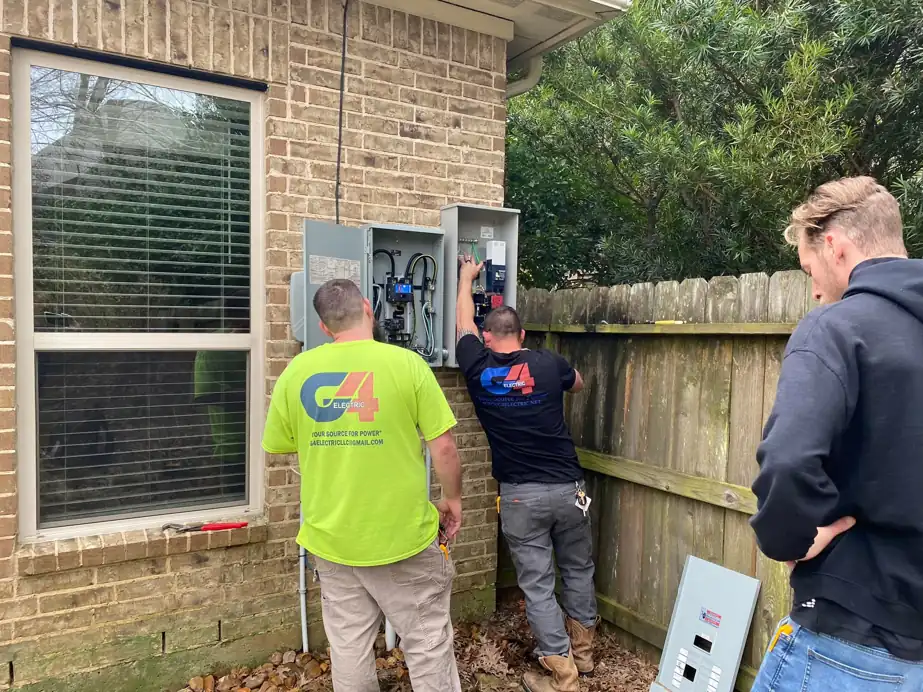
A tripping breaker is doing its job
A breaker is a safety device. When it trips, it's telling you something on that circuit got more than the wire behind it was meant to carry, or something went wrong inside a cord or an appliance. It's annoying, but it's the system working. The mistake is treating it as a nuisance to reset over and over until the problem goes away on its own. It rarely does.
In a newer house the cause is usually simple. Builders wire to a plan, not to your life. A general-purpose circuit might feed a bedroom, a hallway, and the garage outlets all at once. Then you move in and add a second refrigerator, a chest freezer, a space heater in the home office, a window air conditioner, and a pressure washer. Each one is fine on its own. Together, on one shared line, they ask for more than the breaker will allow.
Overload, short, or a worn breaker
There are really three reasons a breaker opens, and they feel different. An overload builds up: the circuit runs a little too hot for a while, and the breaker lets go after a few minutes or when a big motor kicks on. A short circuit or ground fault is immediate, usually with a pop the moment you plug something in or flip a switch. And once in a while the breaker itself is worn or the connection behind it is loose.
A dedicated circuit fixes the first kind. It doesn't cure a short in a bad appliance, and it doesn't repair a loose connection. That's why the first job is figuring out which one you have, not just adding wire.
What a dedicated circuit actually is
A dedicated circuit is a run of cable from your panel to one thing, or one small group of things, with its own breaker. Nothing else shares it. When the freezer cycles on, it's not competing with a hair dryer down the hall. The load is predictable, the breaker is sized for it, and a trip on that line means something specific.
These are the loads that most often deserve their own line:
- A chest freezer or second refrigerator in the garage
- A microwave or any countertop appliance that draws hard for long stretches
- A window or portable air conditioner
- A home office with a computer, monitors, and a winter space heater
- Garage tools such as an air compressor or a table saw
- Pool pumps and other outdoor equipment
- A home EV charger, which should never share a line
Why newer homes trip too
Modern panels often use arc-fault and ground-fault breakers. They're more sensitive than the older kind, which is a good thing, but it means they can trip on a worn power strip, a failing vacuum motor, or a damaged cord that an older panel would have quietly tolerated. If a breaker trips only when one particular device runs, the device is the first suspect. Try it on a different circuit before you blame the house.
What you can check before you call
You can gather useful information in ten minutes without opening anything. Unplug everything on the circuit, reset the breaker once, and plug things back in one at a time. Pay attention to what is running when it trips, and whether it trips right away or after a few minutes. That detail alone helps an electrician find the cause faster.
- Note which outlets and lights go dead when the breaker trips
- Write down what was running at that moment
- Check whether the breaker trips instantly or after minutes
- Feel the outlet cover and plug for warmth, and look for brown or black marks
Stop and call if it trips with nothing plugged in, if you smell something burning, if an outlet is warm or discolored, or if you hear buzzing from the panel. And don't swap in a bigger breaker to make the tripping stop. The breaker protects the wire. Put a larger one on the same wire and you've removed the thing that keeps that wire from overheating inside the wall.
What a local customer had done
One Google reviewer, Jubail Las dunas, wrote that G4 Electric came out for the second time to put in “dedicated lines added to our new house to stop breakers popping.” The review adds, “They did the work there and then.” That's a good picture of how this goes: the cause is a circuit doing too many jobs, and the answer is giving the heavy loads their own paths.
The work itself is straightforward. We run new cable from the panel to the location, add a breaker sized for the load, install the right receptacle, and test it under load. The one catch is panel space. If your panel has no open slots, the conversation shifts to what the panel can support, and sometimes to an upgrade. Ask about permits for your city or HOA before work starts, since requirements around Conroe, The Woodlands, and Woodforest can differ.
When to call
If a breaker in your Montgomery County home keeps tripping and you can't pin it on one appliance, give us a call at (936) 264-1387. Tell us what runs on the circuit and when it trips, and we'll tell you whether it sounds like a dedicated line or something that needs a closer look. You can also write to info@g4electric.net with a photo of your panel label.
G4 Electric LLC, (936) 264-1387
Call (936) 264-1387More articles
Wiring a Metal Shop or Barn: What to Plan Before the Electrician Shows Up
A shop is easy to wire well and expensive to fix later, so a little planning on the front end pays off.
Standby Generators for Montgomery County Storms: What an Install Involves
A standby generator is more than a box on a pad, and knowing the pieces helps you make a better decision.