Wiring a Metal Shop or Barn: What to Plan Before the Electrician Shows Up
A shop is easy to wire well and expensive to fix later, so a little planning on the front end pays off.
October 13, 2026 · 4 min read
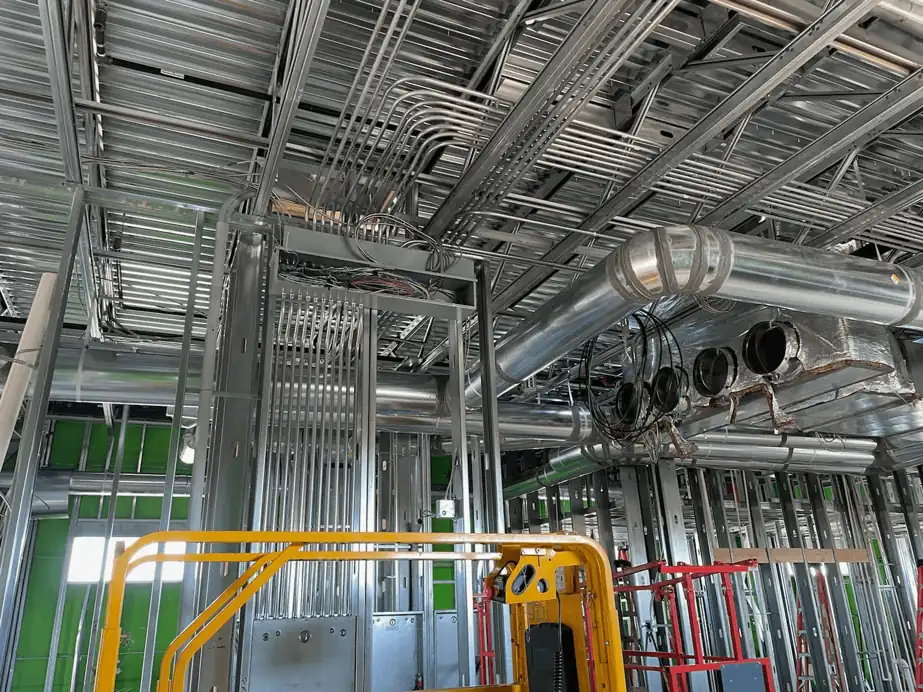
Start with what you'll run, not where the outlets go
The best shop wiring starts with a list of what's going in the building. Not the outlets yet, the equipment. A welder, an air compressor, a lift, a big fan, a window or mini-split air conditioner, and a row of lights all pull power differently, and the total decides how big the feed to the building needs to be and how many circuits you need at the panel.
One Google reviewer, Brian Elias, had his 50' by 70' shop completely wired by G4 Electric, and described the scope in one line: “High bay lighting, giant fan, AC hookups, and outdoor floods.” That's a good template for the conversation. Four categories, each with its own decisions.
Power to the building and the panel inside
A shop out behind the house usually gets its power from a feed that runs underground from the main panel or the meter. The electrician sizes that feed to the load list, then sets a subpanel inside the building, close to the door, where you can reach it without crossing the floor. Put the panel where nothing will ever be stacked in front of it. A clear working space around a panel isn't optional, and it matters more in a shop where pallets and machines tend to migrate.
Leave open breaker slots. Almost every shop gets a new machine within a couple of years, and an open slot is far cheaper to use than a panel swap. Trenching, conduit routes, and permits depend on your property and your city, so ask about permit requirements early rather than after the ditch is dug.
High bay lighting
Tall ceilings call for fixtures built for height. Modern LED high bays throw a lot of usable light and use a fraction of the power the old metal halide fixtures did. The decisions that matter are spacing, mounting height, and switching. Lights spaced too far apart leave dark stripes between them, and a single switch for the whole building means you light the entire place to grab one tool.
- Split the lights into zones so you can light only the bay you're using
- Add a switch at each entry door, not just one by the panel
- Put the work area lights where shadows won't fall across your bench
- Plan lighting before you decide on insulation or a ceiling liner
A big fan and your AC
Large shop fans are heavy, and they move. The mounting has to tie into the building's structure, not just a sheet of metal, and the electrical box or support needs to be rated for a fan. Controls should be at a height you can reach, with a separate wall control rather than a pull chain you'll never find.
Air conditioning is its own circuit. A window unit, a mini-split, or a larger system each needs its own protected line, and a mini-split or outdoor condenser also wants a disconnect within sight of the equipment. Decide on the unit before the wiring goes in, because the circuit size and the cable depend on the model you choose, and changing your mind after the walls are closed is a bigger job.
Outlets, 240-volt power, and outdoor floods
More outlets than you think you need is the right answer. Put them at bench height along every wall, and add a few overhead so you aren't dragging cords across the floor. Receptacles in a shop and on the outside of it should be ground-fault protected. If you run a welder or a compressor, tell the electrician the exact model, because the plug and the circuit have to match the machine.
Outdoor floods need fixtures rated for wet locations, and they should be aimed with intent: at the door, the driveway, the equipment yard, not into a neighbor's bedroom window. Choose between a switch, a photocell, or motion control based on how you use the place. Many people run floods on a photocell with a manual override so they're never in the dark when they pull in late.
How a metal building changes the work
In a steel building, you're usually fastening to girts and purlins rather than studs, and the wiring is often exposed, which means it needs protection where it can be bumped. Conduit is common in shops for that reason. The metal frame also has to be bonded and grounded correctly. Condensation on cold metal is a real issue too, so boxes and fixtures in damp spots should be built for it.
How long the job takes depends on the size, the trench, the equipment list, and inspections. The same reviewer wrote that the crew “Knocked the job out in two days,” which is his experience on his shop, not a promise for yours. A clear plan up front is what makes a fast schedule possible.
Before you call
Sketch the floor plan, list the equipment with model numbers, and take a few photos of the site. Then ring us at (936) 264-1387 or send it all to info@g4electric.net. We work across Montgomery County, from Cut and Shoot and Conroe out to The Woodlands, and we'll help you sort the plan into what the building needs on day one and what to leave room for later.
G4 Electric LLC, (936) 264-1387
Call (936) 264-1387More articles
Breakers Tripping in a Newer House? When a Dedicated Circuit Is the Fix
A new house can still have circuits that don't match how you actually live, and a dedicated line is often the cleanest answer.
Standby Generators for Montgomery County Storms: What an Install Involves
A standby generator is more than a box on a pad, and knowing the pieces helps you make a better decision.