Outdoor Living Electrical: Patio Fans, TVs, Recessed Lights, and Landscape Lighting
An outdoor room runs on weather-ready wiring, and it's much easier to plan it before the ceiling goes up.
October 13, 2026 · 4 min read
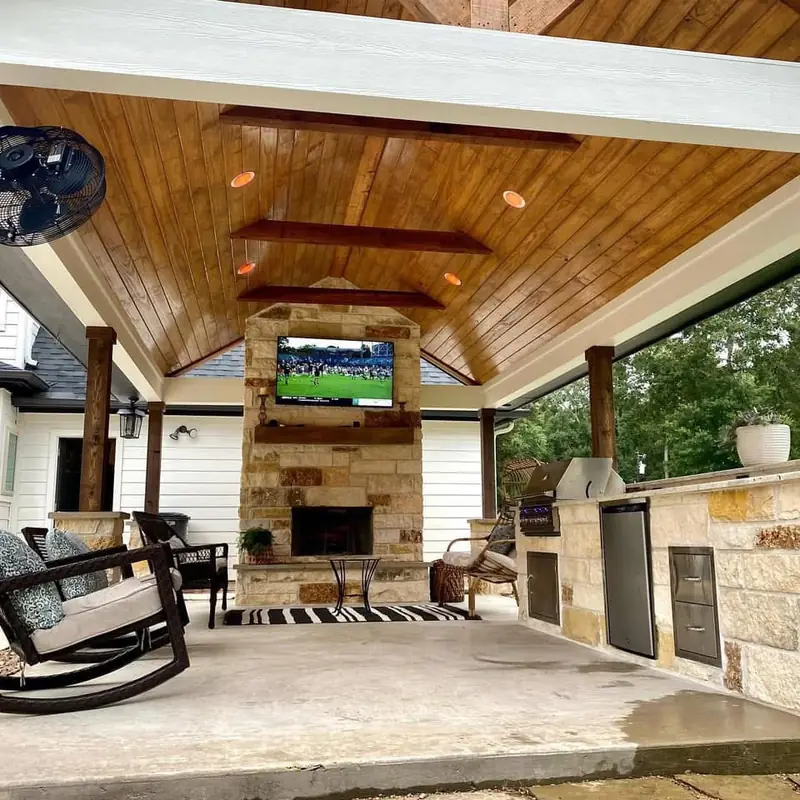
Outdoors is a different electrical environment
A covered patio with a stone fireplace, a fan overhead, and a TV on the wall feels like another living room. Electrically it isn't. Heat, humidity, rain blowing sideways, and insects all find their way into anything not built for them. Equipment that works inside a house can corrode or fail within a season outside, so the wiring and the fixtures have to be chosen for the setting.
One of the photos from G4 Electric's work shows a covered outdoor living room with a tongue-and-groove ceiling, recessed lights, a fan, a TV over a stone fireplace, and an outdoor kitchen. It looks effortless, and that kind of result comes from choosing every piece for where it sits.
Plan the wiring before the ceiling closes
The cheapest time to wire an outdoor room is before the ceiling and walls are finished. Running cable through open framing is fast. Fishing it through a finished tongue-and-groove ceiling or around stone is slow and sometimes impossible without damage. If you're building or remodeling, talk to the electrician when the framing goes up, not after the painters are done.
Before the first conversation, decide what the space will have:
- How many ceiling fans, and whether they get light kits
- Where the TV goes and whether a soundbar or speakers come with it
- Recessed lights in the ceiling, plus any step or accent lighting
- Outlets for the outdoor kitchen, a grill, a refrigerator, or a heater
- Landscape lighting along paths, walls, and trees
Fans and ceiling lights
An outdoor ceiling fan has to be rated for the conditions: damp-rated for a fully covered porch, wet-rated if rain can reach it. It also needs a box or support that's rated for a fan, since a fan pulls and wobbles in ways a light fixture doesn't. Put the fan control on a wall switch you can reach, and think about whether you want the light and the fan on separate controls.
Recessed lights in a covered ceiling should be rated for damp or wet locations too. Pay attention to color. A warm white that matches your indoor lights makes the patio feel like part of the house, while a mix of color temperatures looks patchy at night. Put the lights on a dimmer so they can go from bright for cooking to low for dinner.
Putting a TV outside
A television mounted over an outdoor fireplace needs power and signal behind it. A recessed outlet and cable pass-through inside the wall keeps cords out of sight. Heat is a concern: a TV over a fireplace sits where hot air rises, so check the manufacturer's guidance on placement, and think about whether the TV is rated for outdoor use. Glare matters too. A screen that washes out in afternoon sun is just a black rectangle.
Outlets that handle weather
Outdoor receptacles should be ground-fault protected and covered with an in-use cover, the kind that stays closed over the plug. That keeps rain out while something is plugged in. The outdoor kitchen is where outlets get busy. A refrigerator, a blender, and a light all want power, and big appliances often want their own circuits. Give the kitchen enough outlets that nobody is running an extension cord across the patio floor.
Landscape and accent lighting
Landscape lighting usually runs on low voltage, with a transformer plugged into a protected outdoor outlet and cable running out to the fixtures. It's forgiving, safer to work around, and easy to adjust as plants grow. Place the transformer where it stays dry and accessible, and ask for a timer or photocell so the lights come on at dusk without anyone thinking about it.
Good landscape lighting is about restraint. Light the things worth seeing: a big oak, a stone wall, a path. Uplighting from below makes walls and trees stand out, and path lights should show the way without blinding. If you want power run out to a distant spot, such as a detached pavilion, that involves trenching and conduit, and the depth and permits depend on your city, so ask early.
Choosing who does it
Outdoor jobs are where cutting corners shows up first, usually as a tripping breaker after the first heavy rain. Ashley Able, in a Google review, wrote that “They have all earned a place as MY electricians!” That's a fair standard to hold anyone to before you give them access to your walls.
Talk it through with us
If you're planning a patio, an outdoor kitchen, or just a fan and a few lights, call G4 Electric at (936) 264-1387 or email info@g4electric.net. Send a sketch or a photo of the space and tell us what you want to include. We work across Montgomery County, including Conroe, The Woodlands, and Woodforest.
G4 Electric LLC, (936) 264-1387
Call (936) 264-1387More articles
Breakers Tripping in a Newer House? When a Dedicated Circuit Is the Fix
A new house can still have circuits that don't match how you actually live, and a dedicated line is often the cleanest answer.
Wiring a Metal Shop or Barn: What to Plan Before the Electrician Shows Up
A shop is easy to wire well and expensive to fix later, so a little planning on the front end pays off.